Spot UV printing is a finishing technique that applies a clear, glossy coating to selected parts of printed packaging or marketing material. The coating is cured with ultraviolet light, creating contrast between the treated areas and the surrounding surface.
Spot UV works particularly well over matte or soft-touch lamination. It can highlight a logo, product name, pattern or other design element without making the entire surface glossy.
Reviewed August 2026: This guide distinguishes standard Spot UV from digital and raised Spot UV and includes updated artwork, material and production guidance.
Spot UV Printing at a Glance
- Spot UV adds gloss to selected areas rather than the whole surface.
- It is a print finish, not a colour or ink system.
- Standard Spot UV is usually smooth, while raised Spot UV creates a more tactile effect.
- Matte and soft-touch surfaces usually produce the strongest contrast.
- Common applications include packaging boxes, sleeves, business cards, labels and brochures.
- A separate Spot UV mask is normally required with the print-ready artwork.
What Is Spot UV Printing?
Spot UV printing, also called Spot UV coating or Spot UV varnish, places a transparent UV-curable coating over specific parts of a printed design. Ultraviolet light then cures the coating so the selected areas appear smooth and glossy.
Unlike full UV coating or gloss lamination, Spot UV does not cover the entire printed surface. It is used selectively to draw attention to individual details, such as:
- Brand logos
- Product names
- Headlines
- Symbols
- Patterns
- Parts of an illustration
- Dark-on-dark design elements
Spot UV is not a printing colour. The colours are usually printed first with CMYK or Pantone inks, after which the clear Spot UV coating is applied.
Is Spot UV the Same as UV Printing?
No. UV printing and Spot UV printing describe different processes.
UV printing uses ultraviolet light to cure coloured inks during printing. Spot UV usually refers to a clear varnish applied after the main artwork has been printed.
A product may be UV printed without having Spot UV, or it may be conventionally printed and then finished with Spot UV.
How Does Spot UV Printing Work?
Spot UV printing generally involves five stages.
1. The Main Artwork Is Printed
The packaging, card or marketing material is first printed using the selected colour process, such as CMYK, Pantone or digital printing.
2. A Base Finish May Be Added
Matte lamination or soft-touch lamination may be applied before Spot UV. This creates a non-reflective background that helps the gloss stand out.
3. The Spot UV Areas Are Identified
A separate artwork layer, often called a Spot UV mask, shows exactly where the coating should appear. The mask must align with the main artwork.
4. The Clear Coating Is Applied
The UV varnish is deposited only on the selected areas. Traditional production may use a screen, while digital systems can apply the coating directly from an artwork file.
5. The Coating Is UV-Cured
Ultraviolet light cures the varnish quickly, creating the final glossy effect. Raised Spot UV uses a thicker deposit to produce a more noticeable texture.
What Types of Spot UV Are Available?
| Type | How It Works | Finish | Best Suited To |
|---|---|---|---|
| Standard Spot UV | Clear coating is applied to selected areas, commonly with a screen. | Smooth, selective gloss | Packaging, brochures and medium-to-large print runs |
| Digital Spot UV | Coating is applied through a file-based digital process. | Flat or lightly tactile gloss, depending on the equipment | Samples, short runs and personalised work |
| Raised or 3D Spot UV | A thicker coating deposit creates height. | Glossy and tactile | Luxury boxes, premium cards and bold design details |
| Blind Spot UV | Clear coating is applied without printed colour beneath it. | Subtle tone-on-tone effect | Minimal packaging and understated patterns |
These categories can overlap. For example, raised Spot UV may be produced digitally. Modern digital finishing equipment can apply selective and tactile coatings without traditional screens or dies, although the available height, sheet size and material compatibility depend on the machine. Duplo and Scodix provide examples of current digital embellishment systems.
Which Surfaces Work Best with Spot UV?
Spot UV normally produces the cleanest result on smooth, stable and non-absorbent surfaces.
Recommended combinations include:
- Matte-laminated paperboard
- Soft-touch laminated packaging
- Coated card
- Smooth rigid-box wrap
- Dark matte surfaces
- Laminated business cards
Spot UV can be more difficult to control on highly porous or textured materials. Uncoated kraft paper may absorb the varnish, reducing its gloss and edge definition. A primer, seal, suitable lamination or production test may be required.
Gloss lamination is also less effective as a base because the surrounding surface already reflects light. The Spot UV areas may not create enough visible contrast.
Always confirm the chosen material and coating combination with the printer before approving production.
What Are the Benefits of Spot UV Printing?
It Creates Selective Visual Contrast
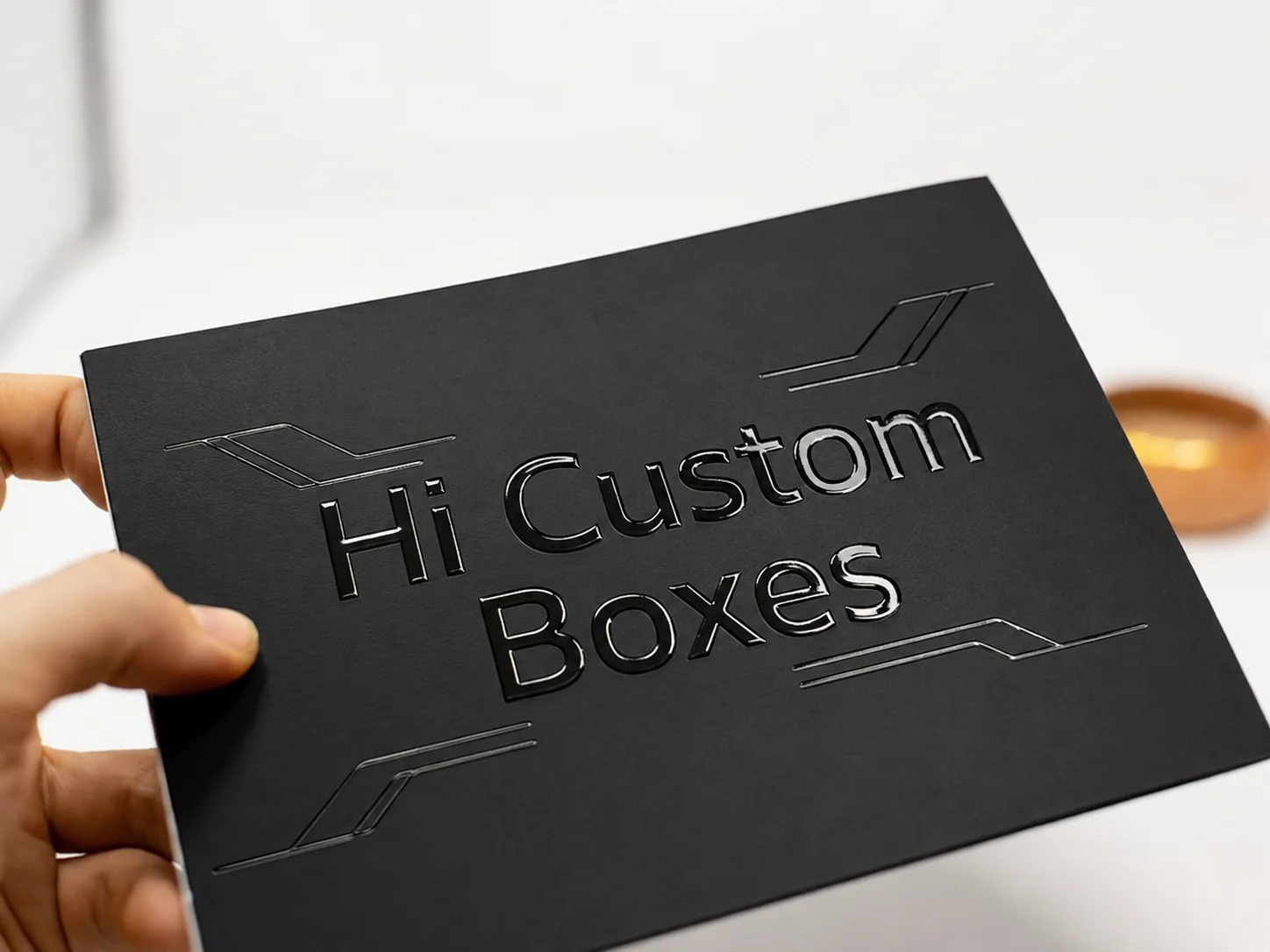
Spot UV makes chosen design elements reflect light while the surrounding area remains matte. This helps a logo, product name or pattern attract attention without changing the printed colours.
It Adds a Tactile Detail
Raised Spot UV introduces a noticeable texture that customers can feel. Standard Spot UV may feel smoother and less pronounced, depending on the amount of coating applied.
It Supports Premium Brand Positioning
Selective gloss is widely used on luxury packaging, cosmetics boxes, presentation packs and high-quality marketing materials. The effect feels considered when it is used on a small number of meaningful details.
It Can Protect the Coated Areas
The cured coating can provide some resistance to light scuffing and handling on the areas it covers. However, Spot UV should not be treated as full-surface protection because most of the printed item remains uncoated.
It Works Without Changing the Box Structure
Spot UV changes the surface appearance rather than the size or construction of the packaging. It can therefore be added to many existing carton and rigid-box designs.
Spot UV vs Lamination, Foil and Embossing
| Finish | Coverage | Main Appearance | Texture | Best Use |
|---|---|---|---|---|
| Spot UV | Selected areas | Clear, reflective gloss | Smooth or raised | Highlighting logos, text and patterns |
| Gloss Lamination | Full surface | Consistent high shine | Smooth | General shine and wider surface protection |
| Matte Lamination | Full surface | Low reflection | Smooth or soft | Creating a refined base for printing or Spot UV |
| Foil Stamping | Selected areas | Metallic or pigmented finish | Flat or lightly pressed | Metallic logos, borders and luxury accents |
| Embossing | Selected areas | Uses the existing printed surface | Raised | Adding physical depth without gloss |
| Debossing | Selected areas | Uses the existing printed surface | Recessed | Creating an understated pressed effect |
Choose Spot UV when you want transparent gloss and contrast. Choose foil when a metallic or coloured reflective finish is required. Choose embossing or debossing when physical depth matters more than shine.
Spot UV can sometimes be combined with these finishes, but registration, production order and surface compatibility must be checked during sampling.
Digital Spot UV vs Traditional Spot UV
| Feature | Digital Spot UV | Traditional Spot UV |
|---|---|---|
| Application | File-based digital deposition | Commonly applied using a screen |
| Physical Tooling | Usually no screen or die | Screen preparation is normally required |
| Short-Run Suitability | Often suitable | Setup can make very short runs less economical |
| Variable Designs | Possible on compatible equipment | Usually uses the same coating mask for the full run |
| Raised Effects | Available on certain machines | Depends on process and coating deposit |
| Bulk Production | Depends on format and equipment | Often suited to repeat or higher-volume work |
Digital Spot UV is often useful for prototypes, limited editions and designs with variable details. Traditional Spot UV may be more economical for larger repeat runs once the setup has been completed.
Neither method is automatically more accurate in every situation. Registration quality depends on the equipment, artwork, substrate and production controls.
Where Is Spot UV Commonly Used?
Custom Packaging Boxes
Spot UV packaging can highlight a logo, product name or repeated pattern on folding cartons, sleeves and rigid boxes. The strongest effect is usually achieved by placing gloss over a matte or soft-touch surface.
See Hi Custom Boxes’ custom printed packaging options for box styles, materials and finishing choices.
Business Cards
A clear gloss logo or name can help a matte business card feel more distinctive without adding another printed colour.
Product Labels and Tags
Spot UV can focus attention on a product name, icon or decorative detail. The label stock and adhesive application process should be tested before a full production run.
Brochures and Presentation Folders
Selected images, headings or graphic details can be coated to create visual hierarchy on covers and folders.
Invitations and Premium Stationery
Raised or standard Spot UV can add a subtle reflective detail to invitations, event cards and branded stationery.
How Should Spot UV Artwork Be Prepared?
Your printer’s artwork specification should always take priority, but a typical Spot UV file requires the following:
- Prepare the main printed artwork at the correct size.
- Create a separate layer for all Spot UV elements.
- Use vector shapes where possible to maintain clean edges.
- Apply one solid spot colour to the Spot UV mask.
- Name the swatch clearly, such as SPOT_UV.
- Keep the mask aligned with the main artwork and dieline.
- Avoid gradients unless the production method supports variable coating levels.
- Do not place Spot UV over folds, creases, glue areas or cutting edges unless the printer approves it.
- Check minimum line weights, text sizes and registration tolerances with the manufacturer.
- Request a physical sample when colour, texture or coating height is commercially important.
The Spot UV mask often appears as solid black on a proof, but this black is an instruction for the coating area. It is not printed as part of the visible design.
What Spot UV Design Mistakes Should You Avoid?
Coating Too Much of the Design
Spot UV loses its selective effect when most of the surface is coated. Highlight a few important elements instead of treating the finish as an all-over gloss.
Using Details That Are Too Fine
Very thin lines, small text and tight gaps may not reproduce cleanly. Minimum tolerances vary, so do not rely on one universal line-weight rule.
Ignoring Registration Tolerance
The Spot UV layer and printed artwork must align. Small shifts are more noticeable around fine text, borders and narrow outlines.
Applying Spot UV Across Creases
A coating placed over a fold or score may crack or produce an uneven result. Keep important Spot UV details away from structural lines unless the finish has been tested.
Choosing the Wrong Base Surface
Spot UV may appear weak over gloss lamination and uneven on absorbent paper. The base material should be selected as part of the finishing plan.
Approving Only an On-Screen Proof
A digital proof can confirm placement, but it cannot accurately show gloss, texture or coating height. Requesting a physical sample is the safer option for premium production.
How Much Does Spot UV Printing Cost?
Spot UV printing does not have one fixed price. The cost depends on:
- Order quantity
- Sheet and finished product size
- Traditional or digital application
- Standard or raised coating
- Percentage of the surface being coated
- Number of Spot UV areas
- Base material and lamination
- Artwork complexity
- Sampling and setup requirements
- Registration tolerance
Digital Spot UV may reduce physical setup for shorter runs. Traditional Spot UV can become more economical for larger quantities, depending on the printer and job specification.
Provide the finished dimensions, quantity, material, artwork and preferred finish when requesting an accurate quotation.
When Is Spot UV Worth Using?
Spot UV Is a Good Choice When:
- One or two design elements need greater emphasis.
- The packaging has a matte or soft-touch surface.
- The brand requires a refined finish without metallic foil.
- Customers will view or handle the packaging closely.
- The artwork contains bold shapes, logos or patterns suitable for selective gloss.
Spot UV May Not Be the Best Option When:
- The packaging surface is rough or highly absorbent.
- The design already uses an all-over glossy finish.
- The artwork relies on extremely fine details.
- Surface recyclability or food-contact requirements have not been confirmed.
- The finish cannot be physically sampled before a large order.
Frequently Asked Questions About Spot UV Printing
What Does UV Mean in Spot UV?
UV means ultraviolet. Ultraviolet light cures the clear liquid coating after it has been applied to the selected areas.
Is Spot UV Always Raised?
No. Standard Spot UV may create a smooth or slightly noticeable coating. Raised Spot UV, also called 3D Spot UV, uses a thicker deposit to produce a more tactile result.
Does Spot UV Contain Colour?
Spot UV is normally a transparent coating. The visible colour comes from the printed artwork or material beneath it.
Can Spot UV Be Applied to Kraft Paper?
Spot UV can be difficult to apply directly to porous kraft paper because the coating may soak into the surface. A compatible primer, coating or lamination may be needed. A production test is recommended.
Is Spot UV Recyclable?
There is no universal answer. Recyclability depends on the packaging material, coating coverage, other laminations and the requirements of the local recycling facility. Ask the packaging supplier for material-specific guidance rather than describing every Spot UV package as recyclable.
Is Spot UV Food-Safe?
Spot UV should not automatically be treated as suitable for direct food contact. Food packaging requires materials and coatings approved for the intended use. Spot UV is commonly applied to the exterior of food boxes, away from the product, subject to the supplier’s compliance advice.
Can Spot UV Be Combined with Foil Stamping?
Yes, the two finishes can be used on the same design. Keeping them in separate areas often produces clearer results. Overlapping finishes require careful testing and an agreed production sequence.
Do I Need a Separate Spot UV File?
Usually, yes. The printer normally needs a separate vector mask or clearly labelled artwork layer showing where the coating should be applied.
Give Your Packaging a More Focused Finish
Spot UV printing adds clear gloss exactly where the design needs attention. Used over a matte or soft-touch surface, it can make a logo, product name or pattern more visible without covering the whole box in shine.
Hi Custom Boxes provides custom packaging with a choice of printing methods, materials and specialist finishes. Share your box dimensions, quantity, artwork and preferred Spot UV effect to receive a production recommendation and quotation.
Request a Spot UV packaging quote and see how selective gloss could work with your design.
Need packaging advice for your next order?
Share your box size, material, quantity, and artwork needs. Our team can guide you before production starts.