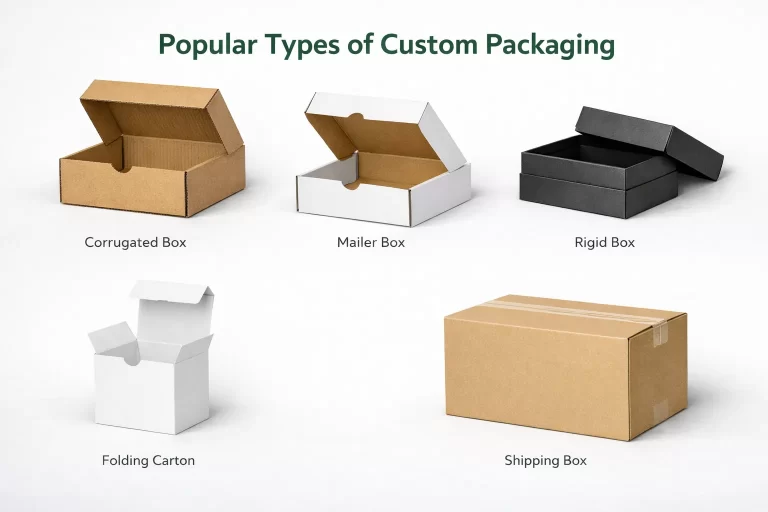
Choosing a packaging designer is not simply about finding someone who can make a box look attractive. Packaging has to work as a physical product as well as a piece of branding. Folds, dielines, board surfaces, print areas, finishes and product dimensions all affect what can actually be produced.
For UK brands, the right designer should therefore understand both creative design and the practical requirements of printed packaging.
What Does a Packaging Designer Actually Do?
A packaging designer turns brand ideas and product information into artwork that works on a physical package.
That can involve:
- arranging logos and typography;
- developing colours and graphics;
- planning information hierarchy;
- working with a dieline;
- considering folds and glue areas;
- selecting suitable finishes;
- preparing print-ready artwork; and
- reviewing proofs before production.
Some designers also work on structural concepts, while others focus mainly on graphics.
That distinction matters. A talented graphic designer may create excellent posters or websites but have little experience designing around cut lines, folds and physical board.
When reviewing a packaging designer, look for evidence that they understand the final printed object rather than just the flat artwork.
Define Your Packaging Project Before Hiring a Designer
A designer can only work effectively when the project itself is reasonably clear.
Before approaching anyone, establish the basics.
Product Dimensions and Box Format
Start with the actual product.
Confirm its finished length, width and height, along with any additional components that will sit inside the packaging.
If you already know whether you need a folding carton, rigid box, mailer, sleeve or another structure, include that information in the brief.
If you are unsure, say so. An experienced packaging specialist should be able to discuss suitable options rather than forcing artwork onto the wrong structure.
Brand and Design Goals
Explain what the packaging needs to communicate.
Is the brand premium, playful, technical, natural, minimalist or gift-led?
Useful references can help, but avoid asking a designer to copy a competitor’s packaging. References should communicate direction, not become a template.
Where the Product Will Be Sold
Packaging for a high-street shelf may need different priorities from an ecommerce box.
Think about whether the product will be:
- sold in retail stores;
- posted directly to customers;
- displayed at events;
- supplied as a gift;
- sold through subscription services; or
- used across several channels.
Artwork and Content Requirements
List everything that needs to appear on the pack, including the logo, product name, instructions, barcode and other required information.
Providing this early prevents important copy from being squeezed into leftover space after the visual design has already been completed.
What Should a Packaging Design Brief Include?
Learning how to brief a packaging designer can save considerable back-and-forth later.
A useful packaging design brief should include:
- product name and description;
- finished product dimensions;
- preferred packaging format;
- target customer;
- where the product will be sold;
- existing brand guidelines;
- logo and colour references;
- approved packaging copy;
- product photography where required;
- examples of the desired visual direction;
- preferred materials or finishes;
- required deliverables; and
- project timescale.
Be specific about priorities.
If accurate brand colour matters more than elaborate illustration, say so. If the packaging needs to feel premium but remain easy to assemble, make that clear too.
A good brief gives direction without prescribing every creative decision.
Where Can You Find a Packaging Designer?
There are several routes depending on the project.
Independent Packaging Designers
A freelancer can be suitable for focused projects, particularly when you want direct communication with the person creating the artwork.
Check that their portfolio includes real packaging rather than only general graphic design.
Packaging Design Agencies
Agencies can suit broader branding projects involving several products, strategy, illustration or a full identity system.
They may offer a wider creative team, but the scope can also be more extensive than a straightforward packaging artwork project requires.
Packaging Manufacturers With Design Teams
Working with a manufacturer that also provides design support can make the transition from artwork to production simpler.
The benefit is usually closer alignment between the dieline, board, printing method and finished box.
The creative scope can vary, so clarify what level of design support is included.
Ready to Bring Your Packaging Idea to Life?
Work with an experienced packaging designer to create artwork that reflects your brand, fits the approved dieline and is properly prepared for printing.
Hire a Packaging DesignerFreelancer, Agency or Packaging Manufacturer?
There is no universal best choice.
| Option | Often Best For | Main Advantage | Check Before Hiring |
| Freelancer | Focused projects | Direct communication | Packaging production experience |
| Design agency | Larger branding projects | Broader creative capability | Scope and production hand-off |
| Manufacturer design team | Design-to-print projects | Production alignment | Creative services included |
Choose according to the project rather than the title of the supplier.
10 Questions to Ask Before Choosing a Packaging Designer
These questions make it easier to compare candidates beyond portfolio appearance.
01Have You Designed Packaging for Similar Products?
Experience in the same industry is useful, but it does not need to be identical.
What matters is whether the designer understands similar structural, branding or production challenges.
02Do You Understand Dielines?
A dieline shows where the packaging will be cut, folded and joined.
Artwork must be positioned around that structure. Important text placed over a fold or too close to a cut edge can create production problems.
03Can You Supply Print-Ready Artwork?
Ask what files will be supplied at the end of the project.
A packaging designer should understand issues such as bleed, image resolution, colour setup and production-ready file preparation.
04Do You Understand Packaging Materials?
Artwork can behave differently on white paperboard, kraft, corrugated board or wrapped rigid packaging.
A designer does not need to manufacture the board, but they should understand that the substrate affects colour, detail and finish.
05Can You Design Around the Physical Product?
The box should be designed around the actual product dimensions and structure.
Designing the front panel first and worrying about the physical fit afterwards is the wrong order.
06How Do You Handle Proofs and Mock-Ups?
Ask whether the process includes digital proofs, 3D mock-ups or physical samples where appropriate.
A flat PDF can be useful, but it does not always show how the design will feel once folded into a box.
07How Many Revisions Are Included?
Clarify the revision process before work begins.
You should know how feedback is handled, what counts as a revision and whether larger changes to the original brief incur additional cost.
08Who Owns the Final Artwork Files?
Do not leave this until the project is complete.
Confirm which files you will receive and what usage rights apply to the finished design.
09Can You Work With the Packaging Manufacturer?
Good communication between designer and manufacturer can prevent avoidable problems.
A designer should be willing to work from the manufacturer’s approved dieline and respond when technical changes are required.
10What Is Included in the Quote?
Two design quotes may cover very different amounts of work. Confirm whether the price includes research, concepts, revisions, dieline setup, mock-ups, print-ready artwork and final source files.
How to Review a Packaging Designer’s Portfolio
A polished portfolio is useful, but look beyond attractive mock-ups.
Check whether you can see:
- finished printed packaging;
- different structures;
- products similar to yours;
- clear information hierarchy;
- consistent branding across a range;
- artwork that works around folds;
- appropriate use of finishes; and
- examples that appear ready for real retail or ecommerce use.
A designer who only shows highly polished 3D renders may still be excellent, but ask to see evidence of work that reached production.
Packaging Design Red Flags to Watch For
Several warning signs deserve attention before you appoint a packaging designer.
Beautiful mock-ups but no production examples
A rendered box does not prove that the artwork printed successfully.
No dieline knowledge
Packaging artwork must respect the cut lines, folds, joins and overall structure.
Design starts before dimensions are confirmed
The product dimensions and box format should always come first.
Material is ignored
Kraft, coated board and corrugated surfaces cannot always be treated identically.
No clear revision process
Ambiguous feedback stages can cause delays, confusion and frustration later.
Final files are unclear
Confirm exactly what artwork and source files you will receive before agreeing.
Competitor designs are copied too closely
Inspiration is useful; imitation creates originality and brand identity problems.
Why Print and Production Knowledge Matters
A design can look perfect on a monitor and still fail once it reaches production.
Cut lines, folds, glue areas, board texture and printing tolerances all influence the final result.
A packaging designer should understand how to work with:
- bleed;
- safe areas;
- dielines;
- print colour;
- board surfaces;
- folds and closures;
- finishing areas; and
- production tolerances.
This does not mean the designer needs to operate the printing press. It means creative decisions should be made with the final packaging process in mind.
DIY Packaging Design vs Professional Design
DIY design is not automatically a bad choice.
It can work when:
- the box structure is already confirmed;
- the brand identity exists;
- the artwork is simple;
- only basic logo and text placement is required; and
- someone can correctly prepare the final production file.
Professional help becomes more valuable when the project includes a custom structure, several product variants, detailed illustrations, premium finishes or a major product launch.
The question is not whether DIY is good or bad. It is whether the complexity of the project matches the skills available internally.
What Files Should You Give Your Packaging Designer?
Preparing the right files makes the process smoother.
Where available, supply:
- a vector logo;
- brand guidelines;
- approved copy;
- product dimensions;
- the manufacturer’s dieline;
- high-resolution photography;
- Pantone or other approved colour references;
- barcode files; and
- useful visual references.
Do not send several conflicting versions of logos or product copy without explaining which one is current.
Clean source material helps prevent mistakes later.
How Much Does Packaging Design Cost?
There is no meaningful single price for every packaging design project.
Cost can change according to:
- complexity of the structure;
- number of concepts;
- illustration requirements;
- number of products or SKUs;
- revisions;
- dieline development;
- 3D visualisation;
- branding work; and
- final artwork requirements.
A simple layout using existing brand assets will normally involve less design work than developing a new visual system for several product ranges.
When comparing quotes, check exactly what each designer is delivering.
Working With a Packaging Designer From Concept to Print
A straightforward workflow usually looks like this:
Brief → Structural requirements → Initial concepts → Artwork development → Proof or mock-up → Revisions → Final artwork → Production
Each stage should answer a different question.
The brief defines the problem. The structure confirms how the package works. The design develops the visual direction. Proofing catches issues before production.
Skipping stages may appear faster, but it can simply move problems further down the process.
Packaging Design Support From Hi Custom Boxes
Brands that prefer to keep design and production more closely connected can work with Hi Custom Boxes for custom packaging design support.
Depending on the project, support can cover packaging concepts, branding, box structures, dielines, digital mock-ups and preparing artwork for production.
The key advantage of a design-to-print approach is that creative decisions can be considered alongside the actual box construction rather than treated as two unrelated stages.
Final Checklist Before You Hire
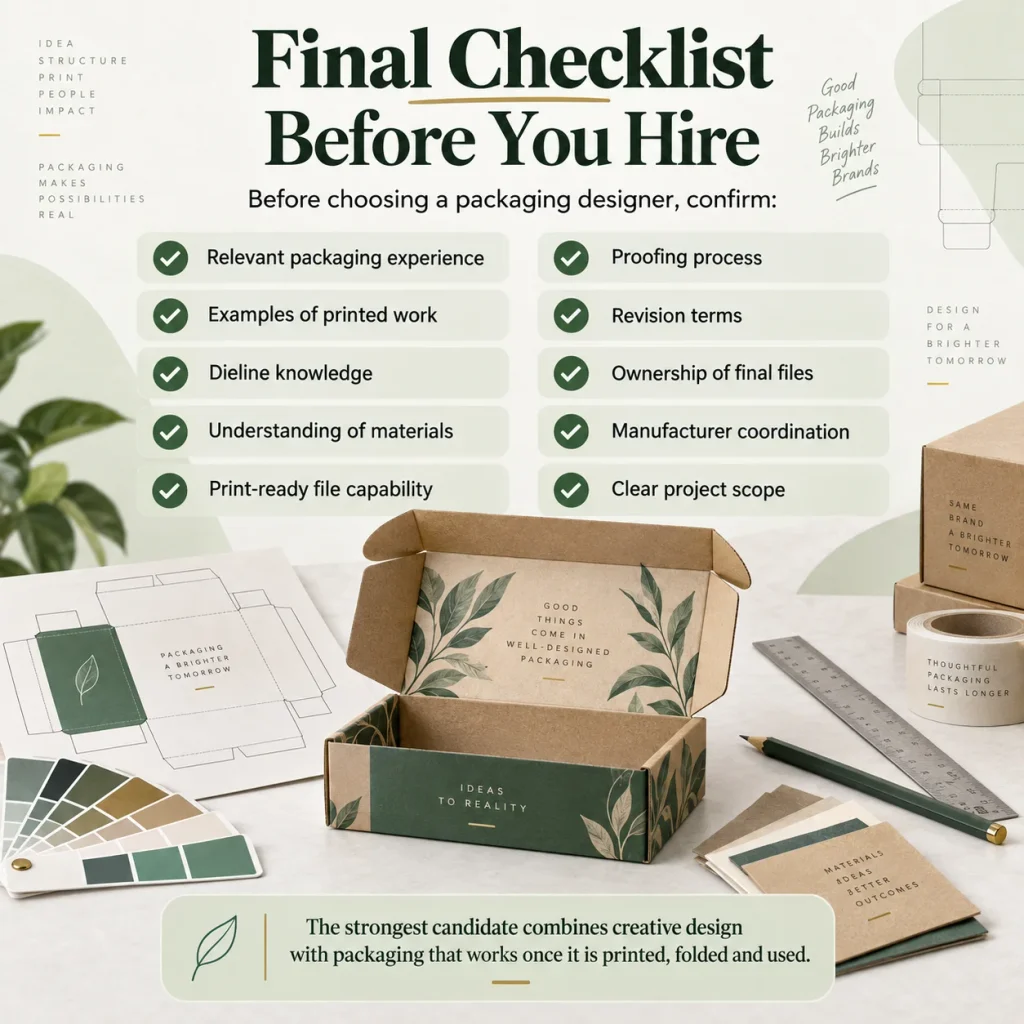
Before choosing a packaging designer, confirm:
- relevant packaging experience;
- examples of printed work;
- dieline knowledge;
- understanding of materials;
- print-ready file capability;
- proofing process;
- revision terms;
- ownership of final files;
- manufacturer coordination; and
- a clear project scope.
The strongest candidate is not necessarily the person with the most decorative portfolio. It is the designer who can turn your brand direction into packaging that looks right and works once it is printed, folded and used.
Need packaging advice for your next order?
Share your box size, material, quantity, and artwork needs. Our team can guide you before production starts.