 UK
UK
 USA
USA


What Is Custom Packaging and Why It Matters for Brands
Packaging isn’t just about protecting your products — it’s the very first impression your brand makes. From the moment a customer sets eyes on a box, sleeve, or mailer, they’re forming opinions about your business. Custom packaging isn’t a luxury; it’s a powerful tool that can elevate your brand, enhance customer experience, and even increase sales.
In this guide, I’ll walk you through what custom packaging is, why it matters, and how brands in the UK can make the most of it.
Table of Contents
- Introduction to Custom Packaging
- Why Custom Packaging Matters
- Key Benefits of Custom Packaging
- Popular Types of Custom Packaging
- Materials Used in Custom Packaging
- How Custom Packaging Impacts Brand Perception
- Cost Considerations
- Design Tips for Effective Packaging
- Conclusion
- FAQs
Introduction to Custom Packaging
Custom packaging is any packaging specifically designed to suit a brand’s product and identity. Unlike generic boxes or bags, custom packaging reflects the personality of your brand and speaks directly to your customers.
Whether it’s a beautifully printed box for a luxury candle, a branded corrugated mailer for e-commerce, or unique shipping boxes for fragile items, custom packaging shows attention to detail and care. It isn’t just about aesthetics — it’s also about protection, functionality, and creating a memorable unboxing experience.
Why Custom Packaging Matters
In today’s competitive market, customers expect more than just a product. They crave experiences. Packaging plays a vital role in creating those experiences.
Think about it: when a customer receives a standard brown box with no branding, it barely makes an impression. But when they open a custom printed box featuring your logo, colours, and even a personal note, it feels thoughtful and premium.
Brands that invest in custom packaging often see:
- Higher customer retention
- Increased social media shares (hello, unboxing videos!)
- Better perceived product value
Ultimately, packaging communicates quality before a customer even touches the product.
Key Benefits of Custom Packaging
Here’s why businesses across the UK invest in custom packaging:
- Brand Recognition: Unique packaging helps your products stand out on shelves and online.
- Customer Loyalty: A memorable unboxing experience keeps customers coming back.
- Protection: Tailored packaging ensures your products arrive in perfect condition.
- Sustainability: Brands can choose eco-friendly materials to align with customer values.
- Marketing Opportunity: Packaging doubles as a promotional tool, sharing your story and values.
Popular Types of Custom Packaging
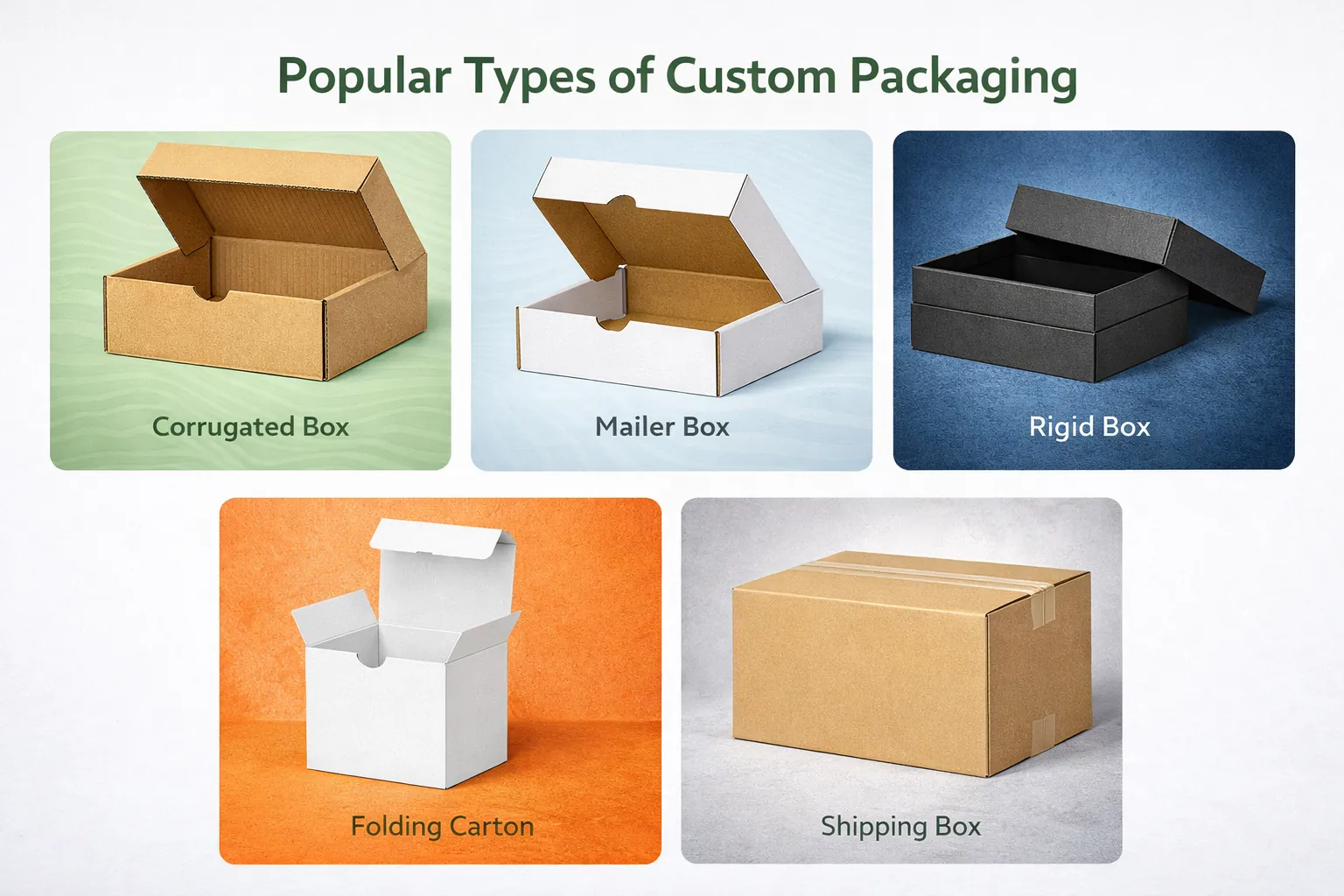
Custom packaging comes in many forms, each suited to specific product needs:
- Corrugated packaging boxes – Perfect for shipping fragile items.
- Mailer boxes – Great for subscription services or e-commerce deliveries.
- Rigid boxes – Ideal for premium products like jewellery or electronics.
- Folding cartons – Common for cosmetics, food, and small retail items.
- Custom shipping boxes – Protects your goods in transit while promoting your brand.
Materials Used in Custom Packaging
Choosing the right material is just as important as the design. Here’s a simple table comparing the most common options:
| Material | Features | Best For |
|---|---|---|
| Corrugated Cardboard | Strong, lightweight, recyclable | Shipping boxes, fragile items |
| Kraft Paper | Eco-friendly, rustic look | Food packaging, gift boxes |
| Rigid Cardboard | Sturdy, premium feel | Electronics, luxury items |
| Paperboard | Lightweight, printable | Cosmetics, retail packaging |
| Plastic | Waterproof, flexible | Mailers, certain food products |
How Custom Packaging Impacts Brand Perception
Custom packaging directly affects how your brand is perceived. A high-quality box can make a modest product feel luxurious. Poor packaging, on the other hand, can make even a premium product seem cheap.
Some ways custom packaging impacts perception:
- Trust: Strong, well-designed packaging signals reliability.
- Professionalism: Consistent branding builds credibility.
- Customer Experience: Thoughtful packaging adds excitement to receiving a product.
Cost Considerations
Many small businesses hesitate to invest in custom packaging because of perceived costs. While custom boxes can be more expensive than generic options, they often pay for themselves through increased sales, repeat customers, and brand loyalty.
Tips to manage costs:
- Choose standard sizes that require less material waste.
- Order in bulk to reduce per-unit cost.
- Focus on key elements like logos and brand colours rather than complex finishes.
Design Tips for Effective Packaging
- Keep it simple and on-brand: Logo, colours, and typography should reflect your brand.
- Consider unboxing experience: Use tissue paper, inserts, or stickers.
- Be eco-conscious: Customers love brands that care about the planet.
- Ensure functionality: Packaging should protect the product and be easy to open.
- Test prototypes: Check your design in real life before a full run.
Conclusion
Custom packaging is more than just a container. It’s a reflection of your brand, a marketing tool, and a way to enhance the customer experience. Whether you’re a small UK business or a growing e-commerce brand, investing in well-designed, high-quality packaging can set you apart from the competition.
By choosing the right materials, style, and design, your packaging will not only protect your products but also leave a lasting impression that keeps customers coming back.
FAQs
A1: Standard packaging is generic and mass-produced, while custom packaging is tailored to your brand’s product, design, and customer experience.
A2: It enhances brand recognition, increases perceived product value, improves customer experience, and can drive repeat purchases.
A3: It can be, but bulk orders and smart design choices can keep costs reasonable. Think of it as an investment in marketing and customer loyalty.
A4: Kraft paper, corrugated cardboard, and recyclable paperboard are excellent options for sustainable packaging.
A5: Absolutely. Corrugated packaging boxes and well-designed inserts can protect delicate products while promoting your brand.


